What Is Interaction to Next Paint (INP)?
Interaction to Next Paint (INP) is the stable Core Web Vital that measures responsiveness from a click, tap, or keyboard input until the browser paints the next frame. It evaluates interactions throughout a visit and usually reports the longest latency, with outlier handling. INP replaced First Input Delay as a Core Web Vital in March 2024.
More About Interaction to Next Paint (INP)
Interaction to Next Paint (INP) is the stable Core Web Vital for interaction responsiveness. It replaced First Input Delay (FID) on March 12, 2024. Instead of checking only the delay before the first interaction, INP evaluates qualifying interactions throughout a person's visit and reports one representative latency value.
What does INP measure?
INP measures the time from a click, tap, or keyboard input until the browser paints the next frame that reflects the interaction. That total includes input delay before event handlers begin, processing time while handlers run, and presentation delay before the next frame appears. Hovering, scrolling, and zooming do not qualify by themselves.
What is a good INP score?
A good field score is 200 milliseconds or less. An INP above 200 and at or below 500 milliseconds needs improvement; anything above 500 milliseconds is poor. The Core Web Vitals assessment uses the 75th percentile of page visits, with mobile and desktop evaluated separately.
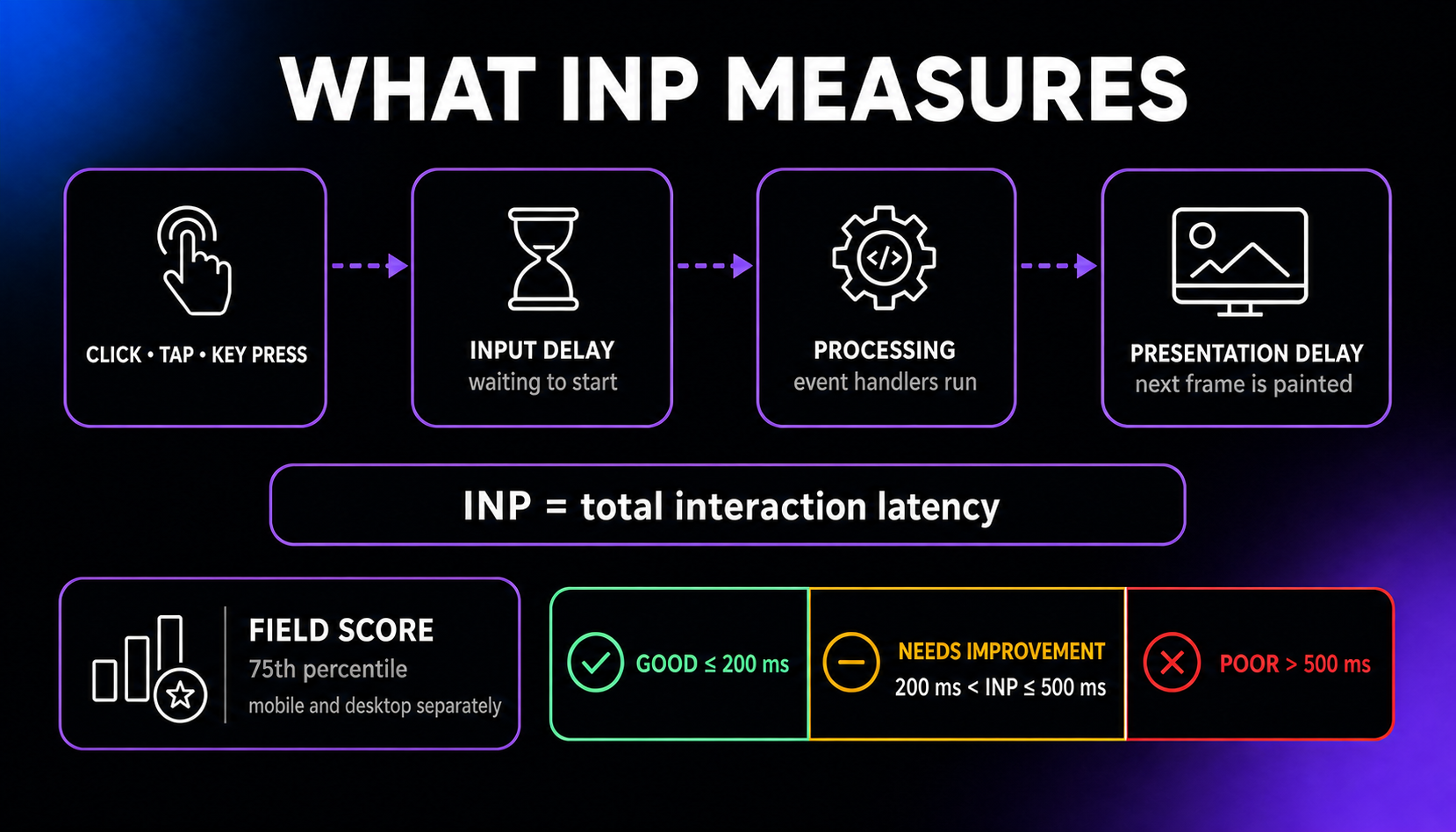
- Good: INP ≤ 200 ms
- Needs improvement: 200 ms < INP ≤ 500 ms
- Poor: INP > 500 ms
How does INP choose one value for a visit?
INP usually reports the visit's longest qualifying interaction. On highly interactive pages, it ignores one highest interaction for every 50 interactions to reduce the influence of random outliers. Most visits have fewer than 50 interactions, so their worst interaction is normally the value. Field tools then aggregate visits at the 75th percentile for the reported page or origin.
How do you improve INP?
Start with field data from the Chrome User Experience Report or real-user monitoring to identify the slow interaction, then reproduce it in the lab. Reduce long main-thread tasks, keep event callbacks short, yield before nonessential work, and avoid expensive layout or oversized DOM updates. Optimize all three latency stages and show the necessary visual feedback in the next frame before deferring secondary work.
Frequently Asked Questions
Professional SEO Services
Our Pro Services team will help you rank higher and get found online. Let us take the guesswork out of growing your website traffic with SEO.
SEO Services