What Is a Domain Registrant?
A domain registrant is the individual or organization that registers a domain name and holds the exclusive right to use it. Rather than owning the domain outright, the registrant holds those rights for the registration period under a contract with a registrar, which records the registration with the domain’s registry.
More About Domain Registrants
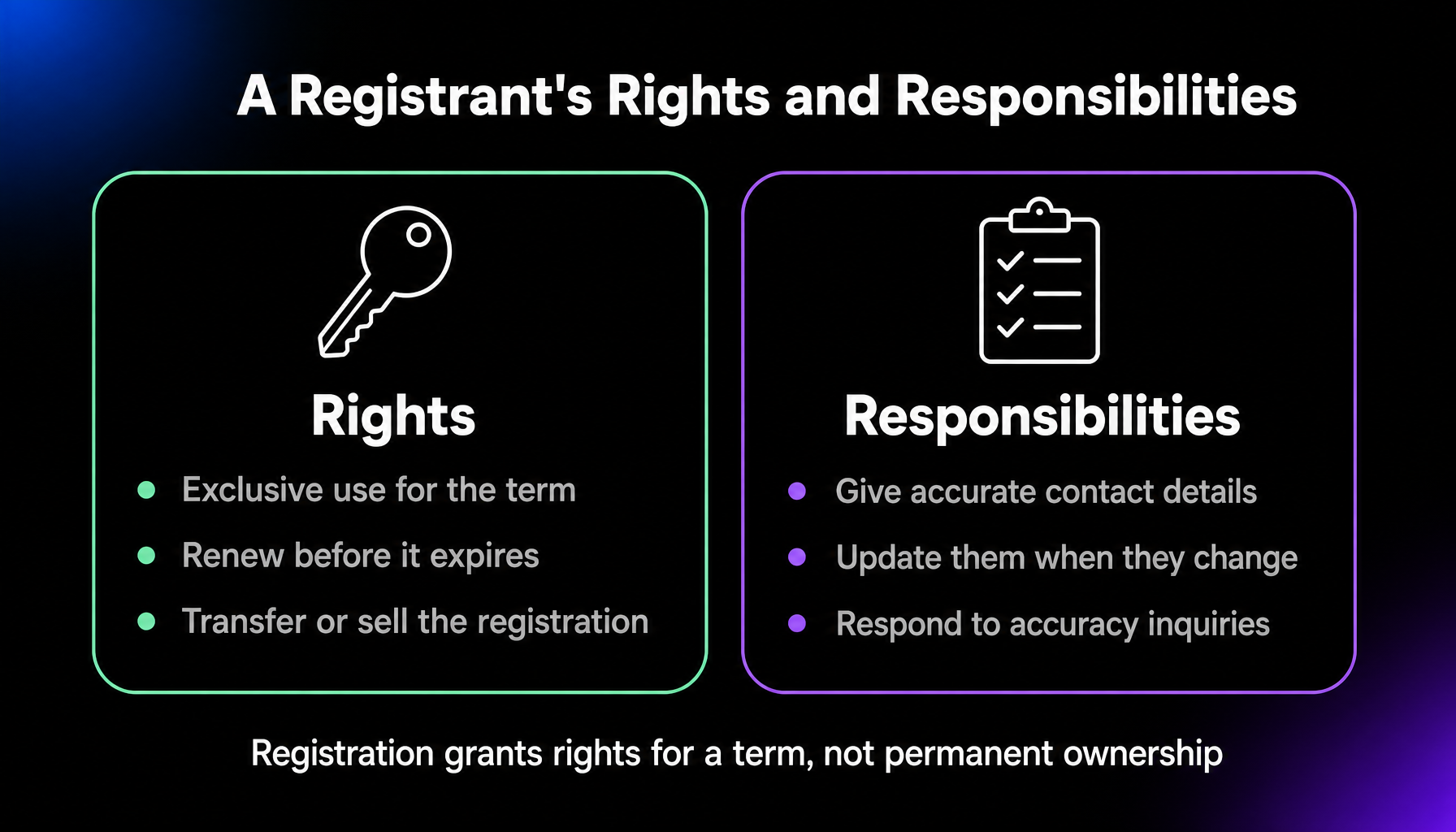
Domain registrants enter into a contract with a registrar to register and manage a specific domain name. Registering a domain doesn't make the registrant its permanent owner — it grants exclusive rights to the name for as long as the registration stays active.
After registering a domain, registrants can access information for managing, renewing, restoring, or transferring their domain. They can modify their domain settings through the registrar, which will send any changes to the registry.
What's the difference between a registrant, a registrar, and a registry?
The registrant holds the rights to a domain name, the registrar sells and manages registrations, and the registry operates the top-level domain (TLD) itself:
Registrant: The individual or organization that registers the domain name and holds the exclusive right to use it for the registration period.
Registrar: The company authorized by the relevant registry to sell and manage registrations. It collects the registrant's contact details and handles the domain on the registrant's behalf; registrars for generic TLDs such as .com must be ICANN-accredited, while country-code TLDs authorize registrars under their own registry's rules.
Registry: The organization that operates a TLD and maintains its authoritative database of every domain registered under it.
For example, if you register example.com through DreamHost, you are the registrant, DreamHost is the registrar, and Verisign — the company that operates .com — is the registry. When you update your contact details or name servers, your registrar sends the change up the chain to the registry.
What rights does a domain registrant have?
Holding a registration gives the registrant the exclusive right to use the domain name and to renew, transfer, or sell the registration — rights ICANN spells out in its Registrants' Benefits and Responsibilities (2013). Per ICANN, registration terms typically run between one and 10 years, and you can renew before the term ends. If the registrant stops renewing, those rights lapse and the domain eventually becomes available for anyone to register.
What are a domain registrant's responsibilities?
Under ICANN's Registrants' Benefits and Responsibilities (2013), registrants must provide accurate, reliable contact details and promptly update them when they change. Providing false information — or failing to respond to a registrar's inquiry about the accuracy of your registration data — can lead to suspension or even cancellation of the registration, per ICANN. Keeping your registrant contact current is the simplest way to protect your domain.
How do I change a domain's registrant?
To change a domain's registrant, request the update through your current registrar — ICANN's Transfer Policy calls this a change of registrant. The typical sequence: submit the new registrant's details in your registrar's control panel, the current and new registrants confirm the change, and the registrar records the updated holder with the registry. Per ICANN's transfer FAQs, changing the registrant's name, organization, or email address commonly locks the domain against transfers to another registrar for 60 days, unless your registrar offers an opt-out beforehand.
A registrant change is not the same as a domain transfer: the first changes who holds the registration, while a transfer moves the domain's management to a different registrar — the registrant can stay exactly the same.
Is registrant information public?
Anyone can look up a domain's registration data using RDAP-based tools such as ICANN Lookup — RDAP replaced the sunsetted WHOIS system as the definitive source for gTLD registration data on January 28, 2025, per ICANN.
However, under ICANN's Registration Data Policy, registrant personal data such as name, address, and email is redacted from public results by default. Domain privacy services add protection for details that would otherwise still appear.
Frequently Asked Questions
Domain Registration
Search for the perfect domain name and register yours before someone else does! Click below to check availability and see special offers.
Domain Names